
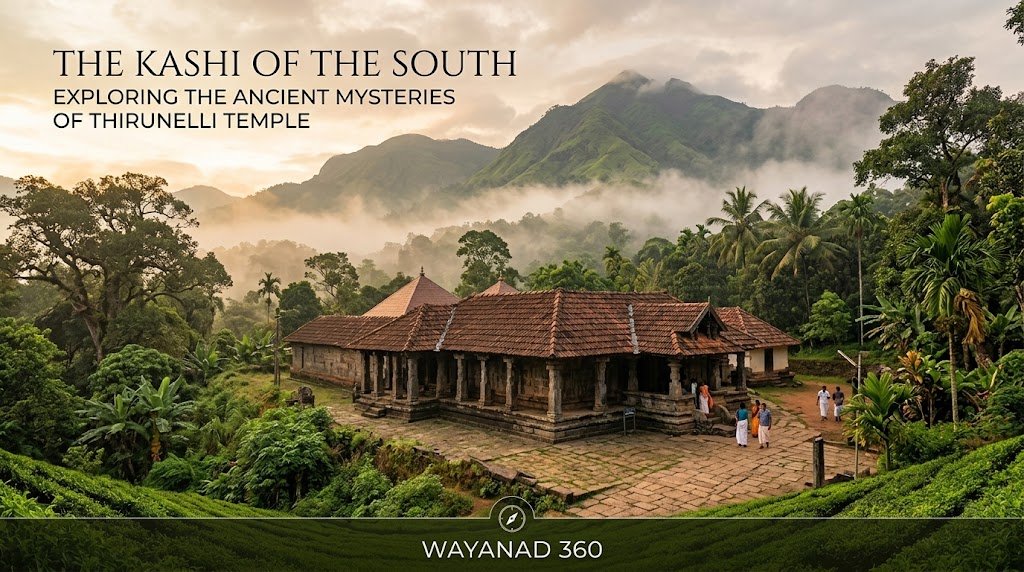
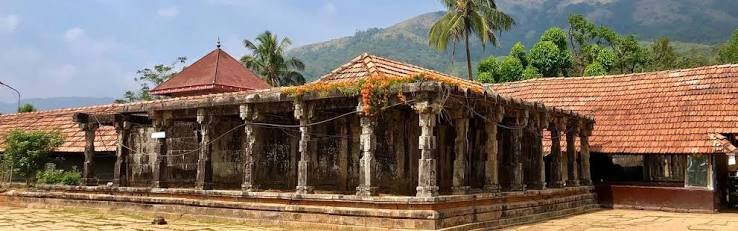
Tucked deep within the shadow of the Brahmagiri Hills, where dense mist clings to the ancient canopy and the air carries the cool scent of wet granite, lies a sanctuary frozen in time.
Known across South India as Dakshina Kashi—the Kashi of the South—Thirunelli Temple is not merely a place of worship. It is an ancient spiritual crossroads, an architectural mystery, and one of the most serene retreats hidden within the wilderness of Wayanad.
Whether you are drawn by deep spiritual roots, ancient stone craftsmanship, or the sheer untamed beauty of the surrounding forest, stepping onto the stone grounds of Thirunelli feels like crossing a threshold into another century.
The Legend of the Gooseberry Tree
The origin of Thirunelli is intertwined with ancient mythology. Local lore holds that as Lord Brahma was flying over the lush Brahmagiri mountains, he was captivated by the sheer beauty of the valley below. Descending to the earth, he discovered an image of Lord Vishnu resting on the branches of an Amla (gooseberry) tree.
Recognizing the sacred nature of the site, Brahma installed the deity here and consecrated the temple. The name itself reflects this origin—Thiru-Nelli translates directly to “the sacred gooseberry.”
Unlike modern temples built by royal decree, Thirunelli is believed to be one of the few shrines where the primary rituals were first performed by the creator himself, earning it a unique place in Vedic traditions.
The Mystery of Panchatheertham & Lord Vishnu’s Footprint
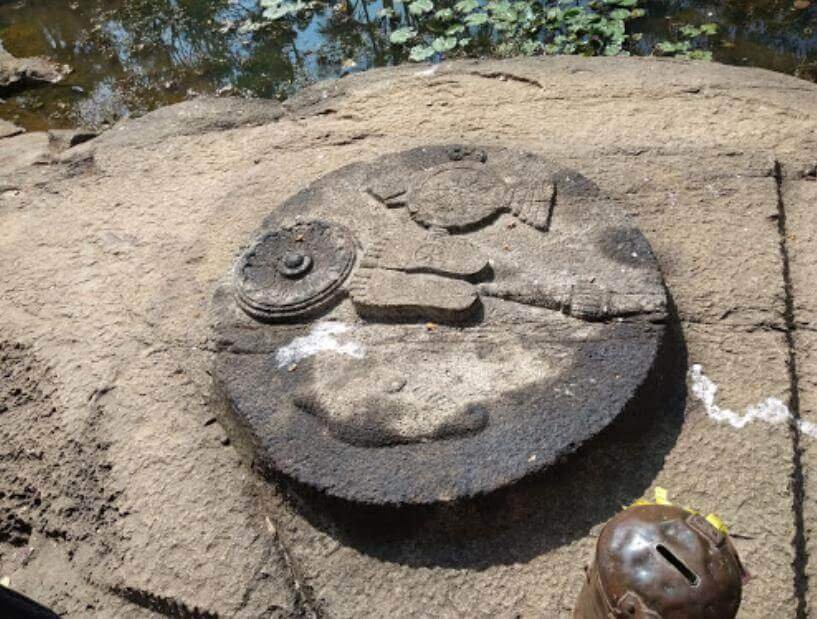
A short path from the stream leads to Panchatheertham, a quiet, moss-draped pool nestled under the forest roots. Local belief holds that this pool was once the meeting point of five divine streams.
At the center of the pool sits a large boulder adorned with a carved footprint known as Vishnupada (the footprint of Lord Vishnu). Legend says Lord Brahma installed the idol of Vishnu here after finding it on a gooseberry (amla) tree, making the surrounding rocks and waters forever sacred. Pilgrims often bow here after completing their ancestral offerings to seek blessings for protection and peace.
The Sacred Waters of Papanasini
A short, moss-lined stone path leads away from the temple structure down into a quiet ravine where the Papanasini Stream flows over polished river rocks.
In Sanskrit, Papanasini means “that which destroys sins.” Fed by medicinal mountain herbs and sacred roots deep within the Brahmagiri range, the crystal-clear waters are believed to possess divine purifying properties.
- Pitru Tarpana Rituals: Pilgrims travel from across the country to perform ancestral rites (Pithru Kriya) on the flat river stones. It is believed that performing these rituals at Thirunelli frees ancestral souls and grants them peace, matching the spiritual significance of Varanasi (Kashi).
- Panchatheertham: Nearby lies Panchatheertham, a sacred pond surrounded by lush foliage, featuring a central boulder carved with the imprint of Lord Vishnu’s feet (Vishnupada).