
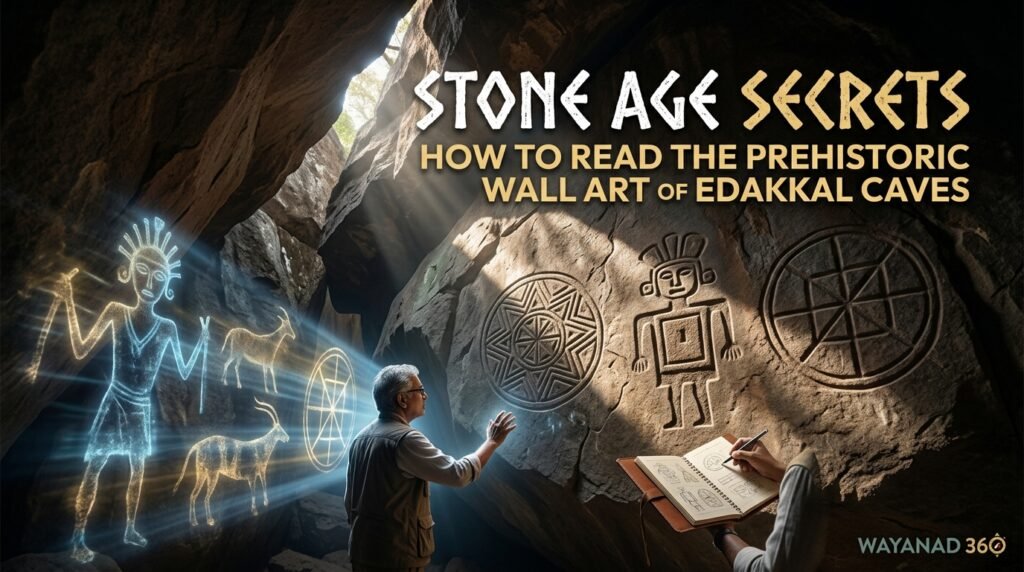
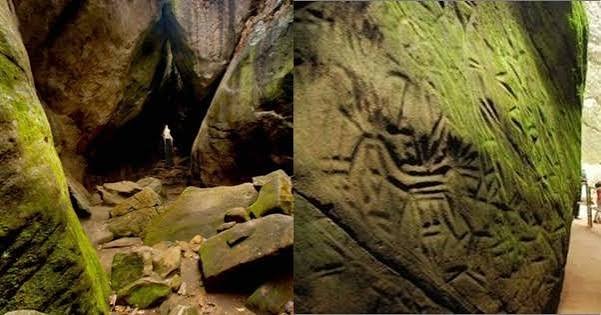
High up on Ambukuthi Mala near Ambalavayal, suspended nearly 4,000 feet above sea level, lies one of South Asia’s rarest archaeological treasures: Edakkal Caves.
Despite their name, Edakkal’s chambers aren’t traditional limestone caves carved by water. The name “Edakkal” literally translates to “a stone in between”—referring to a massive rock boulder that split and wedged itself between two cliff faces, creating a towering, split-rock shelter lit by natural mountain light.
Inside this stone sanctuary are deep, intricate wall carvings (petroglyphs) dating back to the Neolithic and Mesolithic eras—some believed to be over 8,000 years old. These carvings represent the only known prehistoric petroglyphs in South India.
If you are planning to visit, don’t just look at the walls as random scribbles. Here is how to unlock and read the Stone Age secrets etched into the rock of Edakkal.
The Discovery: How British Officers Uncovered Prehistoric Art
The modern story of Edakkal began in 1890, when Fred Fawcett, a police officer and superintendent of the Malabar District, stumbled upon the cleft during a hunting trip. Recognizing the uncanny precision of the carved symbols, Fawcett documented the petroglyphs, bringing global archaeological attention to Wayanad’s prehistoric human presence.
Historians and archaeologists believe these shelters served as an ancient crossroads, ritual site, or temporary campsite along prehistoric trade corridors across the Western Ghats.
Unlocking the Symbols: A Visual Guide to the Wall Art
As you stand inside the upper cave chamber, the sunlight filters down from the narrow crevice above, revealing walls densely covered in geometric motifs, human figures, and animal outlines.
Here is a breakdown of the key symbols you will spot on the rock face:
| Carving Motif | Description & Archeological Interpretation |
| The Masked Chief / Shaman | Human figure with a distinct, raised headpiece and spreading arms. Thought to represent a tribal priest, deity, or village head. |
| Geometric Stars & Grids | Intricate square grids, wheel-like circles, and cross-hatched patterns believed to represent early star charts, territorial maps, or livestock enclosures. |
| The Dual-Bodied Figures | Human figures with stylized triangular torsos and limbs in motion, hinting at ceremonial dances, hunting rituals, or victory celebrations. |
| Flora & Fauna Motifs | Outlines of elephants, dogs, and wheeled carts that suggest the transition from hunter-gatherer life to early agrarian societies. |
The Legend: Local Folklore vs. Archeological Fact
While science traces the carvings back thousands of years, local folklore offers its own enchanting tales:
- The Arrow of Rama: According to local legend, the giant cleft in the mountain was created when Lord Rama shot an arrow into Ambukuthi Hill, splitting the rock in two.
- Kuttiyathan’s Sanctuary: Other indigenous stories hold that local tribal spirits carved the symbols overnight as a divine message to protect the forest dwellers.
Practical Guide: Visiting Edakkal Caves
Visiting Edakkal is both a cultural trip and an uphill workout. Here is what you need to plan your trip effectively:
1. The Climb Up
Reaching the cave entrance requires ascending roughly 300–400 steep stone steps and iron walkways from the base ticket counter. The trek can be strenuous, but paved pathways, handrails, and scenic rest stops line the route.
2. Timings & Daily Pass Limits
To preserve the ancient carvings, the Forest and Archaeology Departments strictly limit daily visitors:
- Operating Hours: 9:00 AM – 4:00 PM (Closed on Mondays and national holidays).
- Visitor Cap: Entry is restricted during peak hours; aim to arrive before 9:30 AM to secure a ticket smoothly.
Rules for Responsible Exploration
Strictly No Touching: Oils and moisture from human hands accelerate rock degradation. Admire and photograph the petroglyphs, but never touch the carved surfaces.
Photography Etiquette: Flash photography can be restricted inside sensitive zones—keep your camera settings adjusted for ambient natural light.
Footwear Matters: Wear sturdy, non-slip sneakers; the stone steps and metal ramps near the cave entrance can get slick after light mist or rain.