
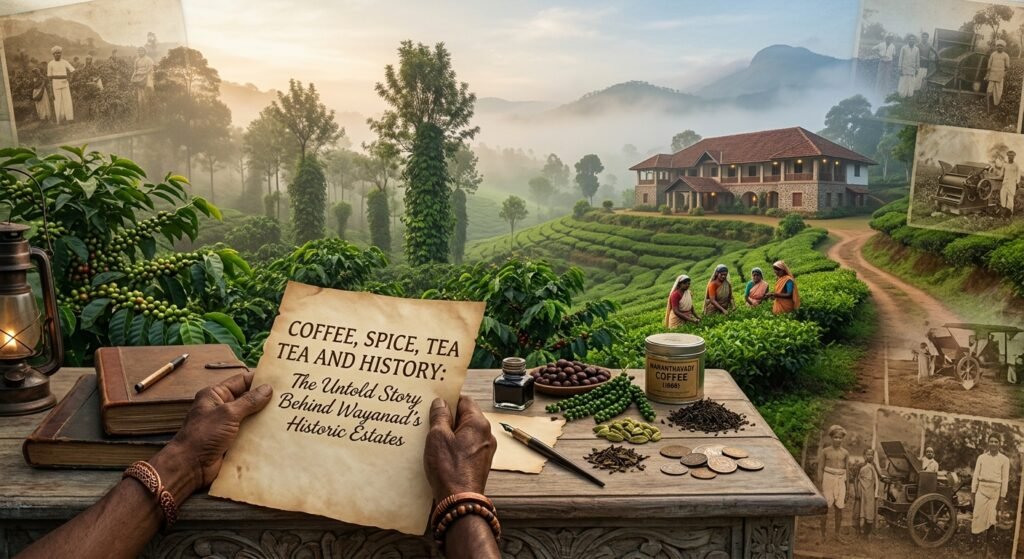
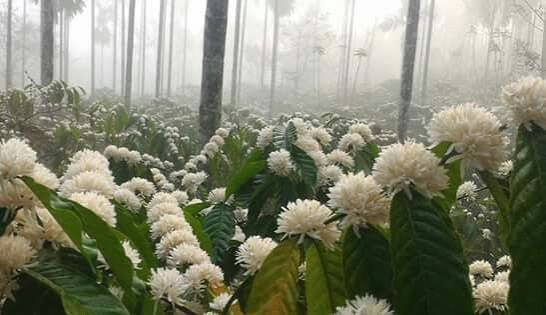
When you drive through the winding hairpin turns of Wayanad, the first thing that hits you isn’t just the cooler mountain air—it’s the perfume. A rich, layered aroma of damp earth, blooming Arabica blossoms, green cardamom pods, and crushed pepper vines hangs thick over the valley.
Today, Wayanad is famous for peaceful plantation retreats and treehouses tucked into emerald canopies. But behind the serene facade of these sprawling estates lies a dramatic history shaped by ancient trade routes, colonial ambition, and centuries of agricultural heritage.
Here is the untold story of how coffee, spices, tea and history transformed Wayanad into the green heart of Kerala.
The Spice Routes: Ancient Wayanad Before Coffee
Long before European planters set foot on the Western Ghats, Wayanad was a crucial link in the global spice trade. For over two millennia, Arab, Roman, and Chinese traders navigated the Arabian Sea to harvest Kerala’s black gold—pepper.
- Wild Black Pepper: Unlike cultivated crops, wild pepper vines (Piper nigrum) climbed freely up giant teak and rosewood trees across the Brahmagiri and Vythiri forests.
- Cardamom & Malabar Cinnamon: Prized for their aromatic and medicinal qualities, these indigenous spices were harvested by local tribal communities who knew every hidden valley of the Ghats.
These native spice trails laid the foundation for Wayanad’s reputation as an agrarian paradise long before systematic plantation farming began.
The Colonial Era & The Rise of the Coffee Pioneers
In the mid-19th century, the landscape of Wayanad underwent a massive transformation. British pioneers, recognizing the ideal combination of high elevation, rich volcanic soil, and heavy monsoon rains, began clearing forest tracts to establish commercial coffee estates.
The Rise of Coffee
While local folklore credits early Sufi traders and settlers with bringing the first coffee seeds to the region, commercial coffee planting took off rapidly in the 1840s. Legendary British companies established major estates across Mananthavady, Vythiri, and Kalpetta. Old stone bungalows, wooden processing sheds, and gravity-fed irrigation systems from this era still stand today—many converted into boutique heritage stays.
The Expansion into Rolling Tea Estates
Towards the late 19th and early 20th centuries, when coffee crops faced severe leaf-rust epidemics, planters diversified into tea cultivation. Whole mountain slopes, particularly around Meppadi, Chembra, and Vythiri, were sculpted into manicured, rolling green tea gardens. These historic tea estates introduced large-scale processing factories and distinct highland tea varieties that continue to thrive today.