
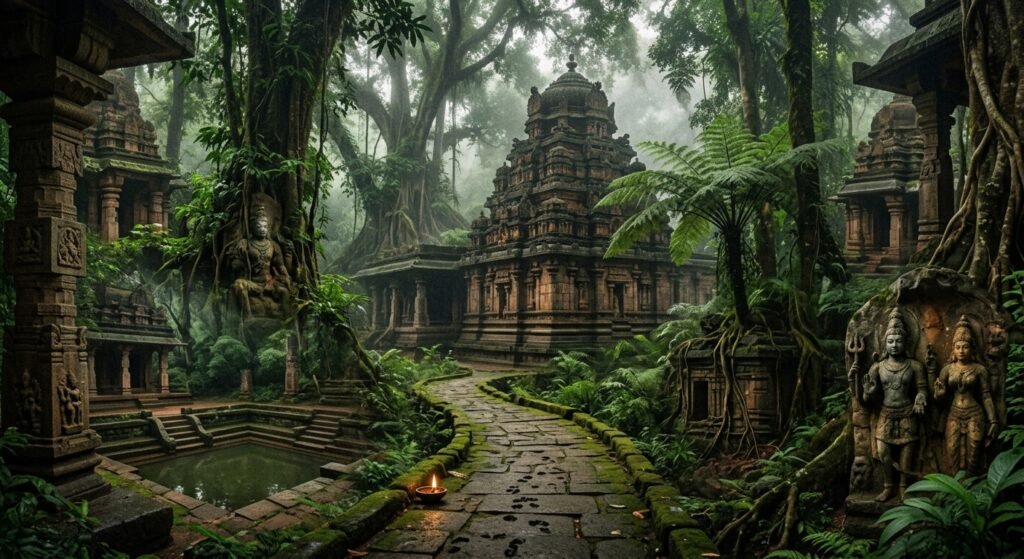
When travelers picture Wayanad, their minds often wander to sweeping tea gardens, roaring waterfalls, and misty mountain peaks. But beneath the emerald canopy of the Western Ghats lies a quieter, deeply spiritual narrative written in stone, timber, and ancient legend.
Beyond the well-trodden paths of major pilgrimage sites lie Wayanad’s hidden temples—architectural sanctuaries where ancient Jain artisans, Kerala kings, and forest-dwelling communities carved their faith directly into the wilderness.
Here is a journey through four of Wayanad’s most historic and tranquil shrines, where history and heritage remain frozen in time.
Bathery Jain Temple: Stone Inscriptions & Changing Empires
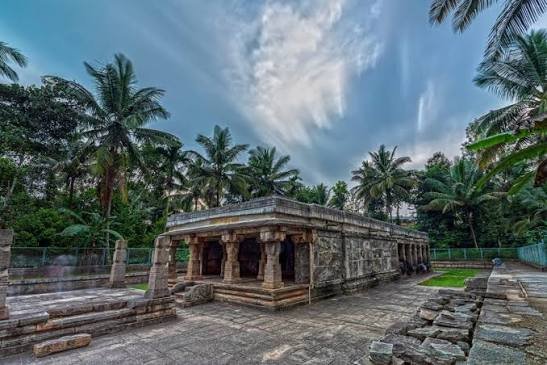
Located in the heart of Sultan Bathery town, this 13th-century granite monument stands as a testament to Wayanad’s rich multicultural past. Built during the height of Vijayanagara architecture, the Bathery Jain Temple reflects a distinct, minimalist Dravidian aesthetic.
- Architectural Precision: The entire structure is crafted from heavy, hand-carved granite blocks, featuring square pillars adorned with subtle carvings of dancers, snakes, and sacred Jain motifs.
- The Colonial Chapter: The temple’s modern name carries a historical twist. In the late 18th century, the Mysorean ruler Tipu Sultan used the temple complex as his military battery (artillery dump), giving rise to the name Sultan’s Battery (now Sultan Bathery).
Today, protected as a national monument, the temple stands silent, surrounded by lush lawns, offering a tranquil space to admire medieval stone craftsmanship.
Thrissillery Shiva Temple: Ancient Sanctums & Sacred Springs
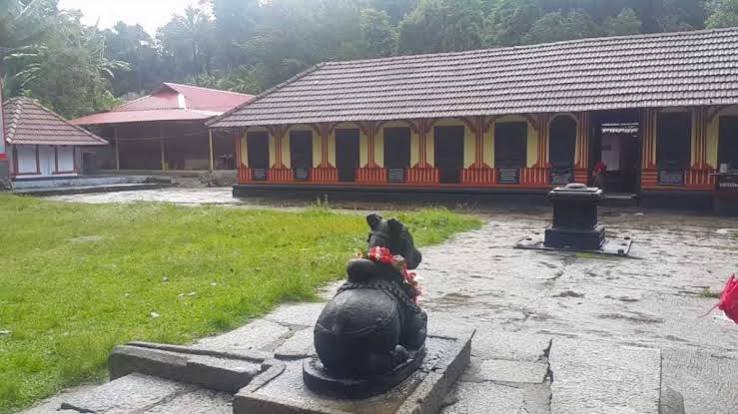
Tucked away in the quiet village of Thrissillery near Mananthavady, this ancient shrine is intrinsically linked to Thirunelli Temple through sacred mythology and spiritual practice.
- Architectural Highlight: Built in traditional Kerala temple style with dark teak timber and stone foundations, Thrissillery is dedicated to Lord Shiva.
- The Sacred Water Tank: A unique feature of the complex is the small shrine dedicated to Jala Durga, located within a natural water spring inside the temple grounds. According to local belief, the spring’s water level never dries up, even during the peak of summer.
A complete traditional pilgrimage in North Wayanad was historically considered complete only after visiting both Thrissillery and Thirunelli.
Valliyoorkavu Temple: The Tribal Cultural Crossroads
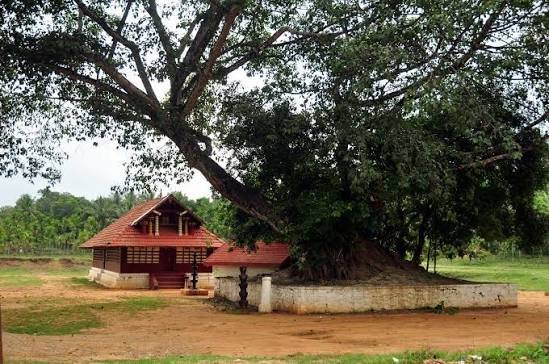
Situated near Mananthavady along the banks of the Kabini River, Valliyoorkavu Temple holds a profound cultural significance for the indigenous tribal communities of Wayanad, including the Adiya and Paniya tribes.
Dedicated to Goddess Bhagavathy (in three forms: Vana Durga, Bhadrakali, and Jala Durga), the shrine comes alive during its famous 14-day annual festival (Valliyoorkavu Arattu) held every March/April.
- Living Heritage: Historically, the festival served as a gathering ground for local tribes, featuring traditional dance performances, ritual chants, and cultural exchanges.
- Forest Setting: Surrounded by ancient trees and river bends, Valliyoorkavu offers a glimpse into how Kerala’s temple traditions blended seamlessly with forest worship.
Seetha Devi Temple, Pulpally: Lored Earth & Epic Myths
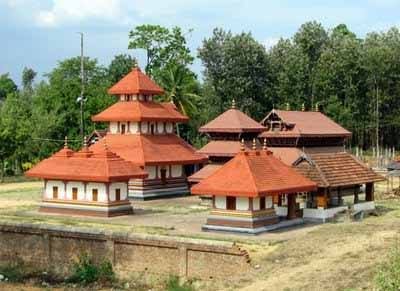
Set near the banks of the Kabini River in Pulpally, this is one of the rare temples in South India dedicated exclusively to Goddess Seetha.
The temple’s grounds are deeply tied to the Ramayana epic:
- The Sanctuary: Legend holds that when Seetha was exiled, she found refuge in the hermitage of Sage Valmiki in these very forests.
- Lava & Kusha: Local tradition identifies Pulpally as the birthplace of Seetha’s twin sons, Lava and Kusha, with nearby spots named after events from their childhood.